
2 November 2026
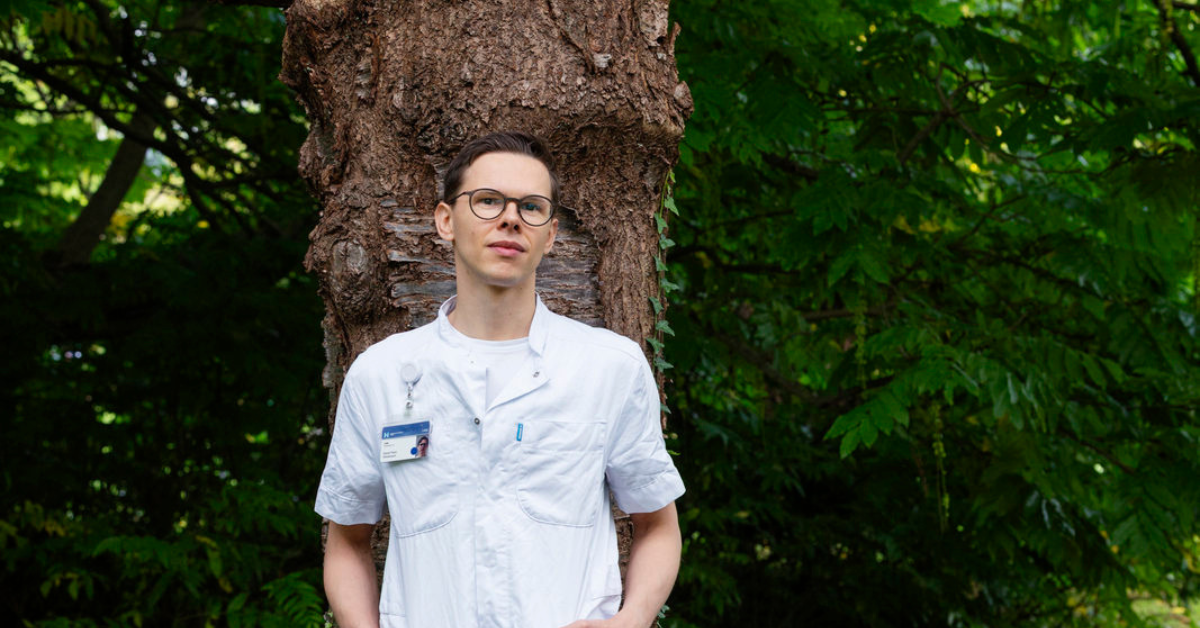
Fast-expanding wounds are a part of the disease pyoderma gangrenosum. With his Dr Abildgaard Fellowship project, David Thein Heinemann brings in all available sources to understand it.
Imagine a car with an accelerator but no brakes. That is how David Thein Heinemann describes the behavior of pyoderma gangrenosum (PG). A rare disease bringing wounds that expand fast, destroying the underlying tissue around them. It will be his focus as a LEO Foundation Dr Abildgaard Fellow.
Wound healing has been an interest of the Senior Researcher at Bispebjerg Hospital, since one impactful presentation during his medical studies. He saw images of a girl with burn wounds and how stem cell therapy made it possible to replace the damaged tissue with new skin.
“It stuck with me,” he says.
Since then, he has built experience across the areas the Dr Abildgaard Fellowship project depends on, from lab work to handling large sets of health data. For him, new insight often comes from connecting what others have not yet linked.
“What happens if I take all these puzzle pieces from established research and bring them together?”
Today there is no test that can confirm PG or predict who will respond to treatment. Doctors diagnose it by recognizing the pattern and ruling out other causes. As he describes it, disease management can be hit-or-miss.
“Sometimes you want to say to the patient: ‘We apologize that medical research is not further ahead, that we lack the knowledge that could improve your treatment.’ But the despair is real for patients. We must do better here. This motivates me.”
People with PG are diagnosed slowly. They may stay in the hospital for months with no positive progress.
“If you go from being a functional individual society to that kind of crisis, you can try to imagine how it feels and likely still not get it right.”
A preference for world-building
His study combines nationwide health registries and new molecular analyses of wound fluid, blood, and tissue. In clinical trials, only about half of PG wounds heal after six months of standard treatment. One aim of the study is a swab test that shows early whether treatment is working. Swabs collect a fluid sample with the use of a stick. Hospitals already use them, but not for this. With PG they could track treatment progress faster and without doing a biopsy of the skin.
“Avoiding a biopsy is preferable, since its invasiveness risks aggravating PG wounds,” he says.
Part of the study is also to understand what the car without brakes looks like in terms of molecules: to get a precise fingerprint of the disease.
“There are gaps in our knowledge at almost every level, which means there is still so much more to learn.”
Many elements of research have felt natural to him, chief among them the focus it requires. He loves working with music in his headphones. Still, he welcomes interruptions from other researchers, since they bring new puzzle pieces to pick up and help him discard the ones that do not fit.
“I have been so lucky that people invested time in me from the beginning. Their support made me reach a point where I am not afraid of staying in an area that is difficult.”
He compares research life to a favorite pastime of his: playing Dungeons & Dragons with friends.
“Playing that game is also a case of coming up with a hypothesis to test. You invent a world that might not be possible, but you go ahead anyway and adapt as you go. And whether you succeed or fail a mission, you likely learn something in the process.”
About David Thein Heinemann
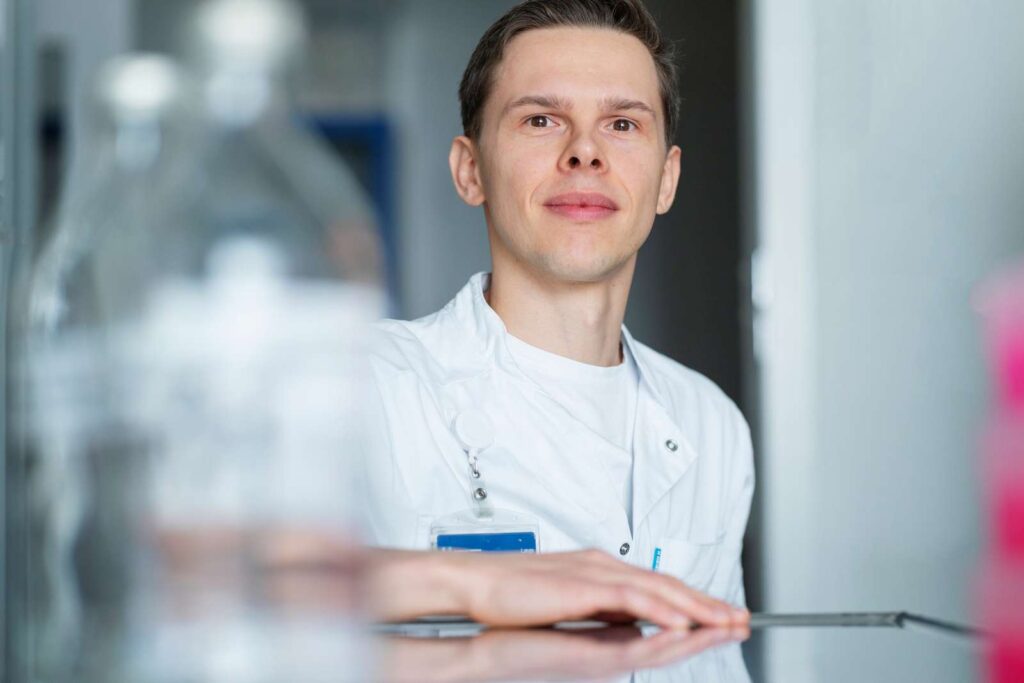
MD, PhD, Senior Researcher
Bispebjerg Hospital, Department of Dermato-Venereology and Wound Healing Center
Research project: Pyoderma Gangrenosum: Integrating Population Epidemiology, Patient Priorities, and Wound Omics to Personalize Treatment and Predict Healing.
Awarded the LEO Foundation Dr Abildgaard Fellowship 2026: DKK 12 million over 5 years.
Project team members made possible by the support: Two PhDs, one postdoctoral researcher, and one research nurse.
On receiving the fellowship: “It provides a big platform. And the study is resource-heavy in the many data sets it explores. We could not do it without LEO Foundation’s support.”
On navigating research life: “It is not possible for me not to do research. It is exciting to enter an uncovered field and ask: How do I move forward in a way that is reasonable and safe? With research there is always something new to dig into.”
Advice for a younger researcher: “Develop your expertise, both by going wide and deep. Approach new technologies as catalysts for your work. And protect your time for deep thinking, and for the people who matter most.”