
2 November 2026
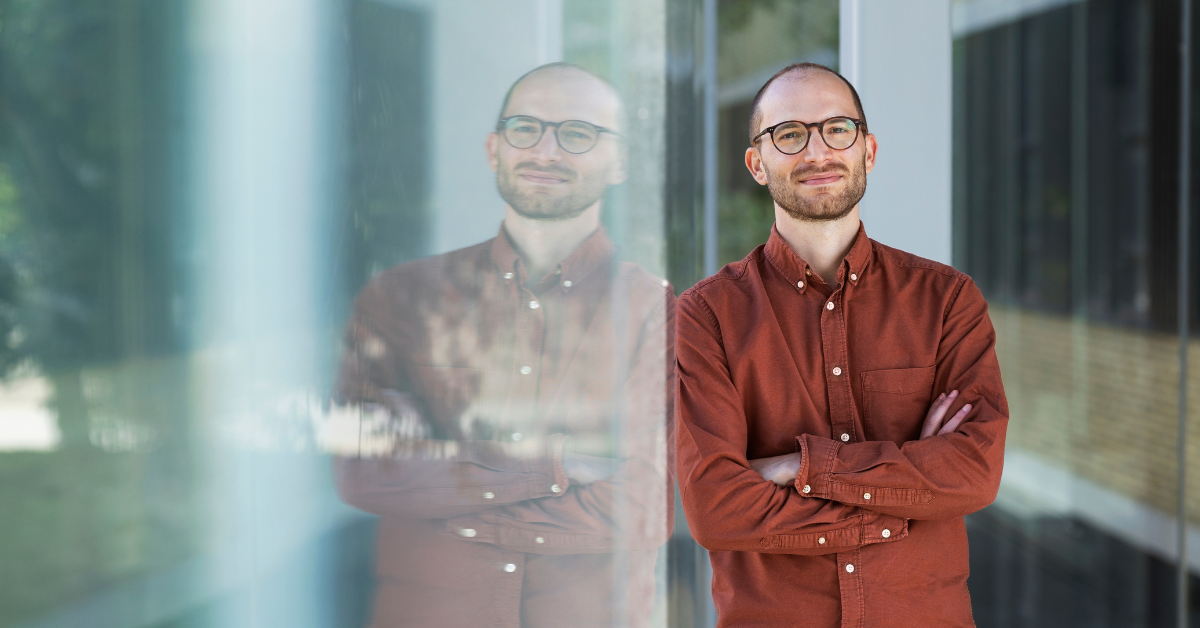
Patients with chronic wounds are stuck in a loop of skin damage. As a Dr Abildgaard Fellow, Konstantinos Kalogeropoulos wants to regulate the body’s over-active response.
It is one of those childhood learnings: A bruised knee becomes a blood clot that becomes a scab, which falls off and may leave a scar, all within a few weeks.
“We pick up on how this works so early. And then you can reach a point, where it does not,” says Konstantinos Kalogeropoulos, an Assistant Professor at Technical University of Denmark.
Chronic wounds is the focus of his upcoming study that was awarded a Dr Abildgaard Fellowship grant from the LEO Foundation. These kinds of forever wounds affect up to 4 percent of the population. For Europe it makes up 1,5 million people. Today’s treatment is at once laborious – wrappings that need to be changed regularly combined with medication that dampens the immune system – and imperfect.
“We try to treat it, but for many it is incurable. You can say it is an area where research and its clinical outcome have failed so far.”
His project aims to break this treatment history, specifically by adding an inhibitor to the over-active enzymes of the wounds. The inhibitor is lab-made, not replicating an existing one in the body, but “created out of thin air”, as he says about the daunting, leap of faith aspect of it.
Getting into the nuts and bolts
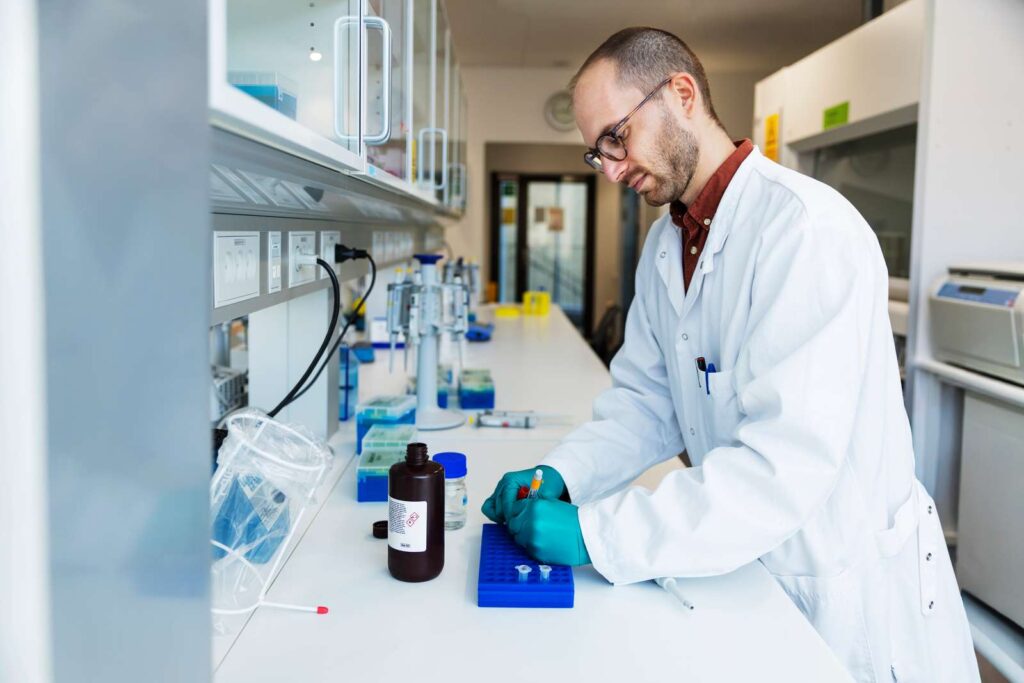
On the level of actually doing it, he uses advanced artificial intelligence to design the inhibitor targeting the enzymes known as proteases. It is complex, because there are more than 60 different proteases active at any time in the skin. He wants to target only the ones causing disruption. The end game would be an applicable treatment. This study is an early step towards that. First, he needs to see if the healing process can be corrected in the lab.
“With wounds no inflammation at all is bad – you want the body to respond – but too much is bad as well, which is the case here. The patients are stuck in a loop of damage to the skin, which blocks them from healing”.
Changing the everyday lives of patients is a key motivation for him. A consequence of the wounds for the ones affected can be social isolation.
“It is not an easy way to exist in the world,” he says.
He is also driven by his interest in the skin as an organ.
“I am deeply fascinated by its layered structure and how it keeps changing.”
It was his PhD advisor Ulrich auf dem Keller that instilled that in him. Together with the soft guidance of reminding his student to locate joy in research.
“You have to, because of the work pace and constant course corrections. And I can find that joy, it is accessible to me, when I get into the nuts and bolts of an area.”
As a kid growing up in Greece he already had the ability to lose himself in something. While his parents were not researchers, they gave him the space.
“They allowed me to pursue what interested me. And to approach problems with logic and reasoning. Even though they were outside academia, my dad was in public service and my mom working as a customs officer, they were completely devoted to their work. I took this with me.”
About Konstantinos Kalogeropoulos
PhD, Assistant Professor
Technical University of Denmark, Department of Biotechnology and Biomedicine
Research project: PROTECT: AI-driven Precision Protease Binders as Therapeutics for Chronic Wound Healing.
Awarded the LEO Foundation Dr Abildgaard Fellowship 2026: DKK 12 million over 5 years.
Project team members made possible by the support: Two PhDs and a postdoctoral researcher.
On receiving the fellowship: “This grant allows me to devote much more of my time to science. That is why it is amazing.”
On navigating research life: “Research takes a certain kind of commitment and sacrifice. We need to think ahead but also be productive in the short run. And you need to be adaptive. If you just want a clear structure, research cannot always give that.”
Advice for a younger researcher: “Don’t specialize too much. Go outside your domain, know physics, history, chemistry and biology. An encyclopedic view on things is a resource for your reasoning.”