
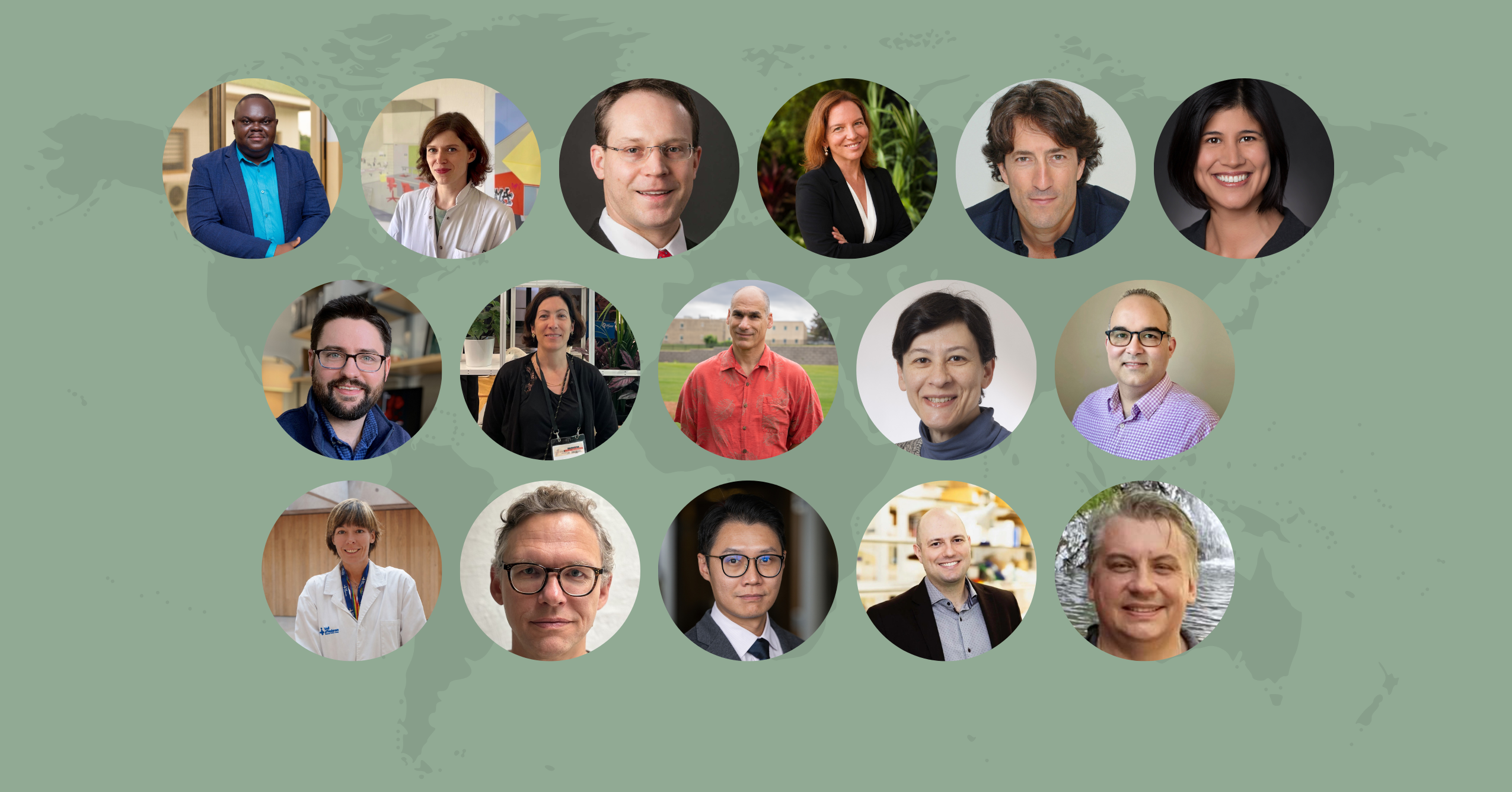
The 16 international researchers awarded a LEO Foundation Research Grant.
12 August 2026
The LEO Foundation has awarded DKK 61.9 million (EUR 8.3 million) to 16 international research projects, supporting scientists whose work has the potential to deepen our understanding of the skin and pave the way for better prevention, diagnosis, and treatment of skin diseases.
Following international peer review, 16 research projects have been selected for funding, representing a broad range of approaches to some of the most pressing challenges in dermatology.
“Every breakthrough in science begins with curious and ambitious researchers asking important questions. Through our Research Grants program, we are proud to support outstanding scientists whose work expands our understanding of the skin and brings us closer to better treatments for people living with skin diseases,” says Anne-Marie Engel, Chief Scientific Officer at the LEO Foundation.
The newly funded projects span basic, translational and clinical research, addressing inflammatory skin diseases, autoimmune disorders, rare genetic conditions, skin infections, pigmentation disorders and skin immunity.
Among the projects receiving funding are:
Understanding one of the most common causes of chronic itch
Assistant Professor Rosaria Gandini at Aarhus University, Denmark, will investigate how the signaling molecule IL-31 activates the itch response in atopic dermatitis. By visualizing the interaction with its receptor at molecular level using cryo-electron microscopy, the project aims to identify new opportunities for developing more precise anti-itch therapies.
Building the first functional map of the skin microbiome
Senior Scientist David Gomez Varela from the University of Vienna will develop a new technology capable of measuring both human and microbial proteins from a simple skin swab. Rather than only identifying which microbes are present, the project seeks to reveal what they are doing, opening new possibilities for precision dermatology and personalized treatment.
A smarter way to treat vitiligo
Professor Georgios Sotiriou at Stockholm University is developing a painless microneedle patch that delivers biologic medicines directly into affected skin. By targeting treatment locally rather than throughout the body, the approach could improve efficacy while reducing the risk of serious side effects.
Advancing treatments for rare genetic skin disease
Academic employee Søren Lykke-Andersen at Aarhus University will explore an RNA-based therapy for Darier’s disease, a rare inherited disorder that causes painful skin lesions, recurrent infections and profound psychosocial burden. Instead of replacing the faulty gene, the project aims to boost the activity of the healthy copy, offering a potential new treatment strategy that could also be applied to other rare genetic diseases.
Developing better models for autoimmune blistering disease
Associate Professor Karl Koehler at Boston Children’s Hospital will use stem-cell-derived skin organoids to study bullous pemphigoid, an autoimmune disease that primarily affects older adults. The project will provide a more realistic human model for understanding how the disease develops and for testing future therapies.
Supporting outstanding skin researchers worldwide
The Research Grants program supports investigator-driven research across the full spectrum of skin science. By funding innovative ideas from researchers around the world, the LEO Foundation aims to strengthen independent skin research and accelerate discoveries that improve skin health for people globally.
Research Grants recipients:
- Karl Koehler, Associate Professor, Boston Children’s Hospital, USA
- Christopher Bunick, Associate Professor, Yale University, USA
- David Gomez Varela, Senior Scientist, University of Vienna, Austria
- Cristina Solé Marcé, Principal Researcher, Vall d’Hebron Research Institute, Spain
- Rosaria Gandini, Assistant Professor, Aarhus University, Denmark
- Lam Tsoi, Associate Professor, University of Michigan, USA
- Søren Lykke-Andersen Academic employee, Aarhus University, Denmark
- Georgios Sotiriou, Professor, Stockholm University, Sweden
- Thomas Sicheritz-Pontén, Professor, University of Copenhagen, Denmark
- Marta Giacomello, Associate Professor, University of Padua, Italy
- Aloysius Loglo, Postdoctoral Research Fellow, Kumasi Centre for Collaborative Research in Tropical Medicine, Ghana
- Janin Chandra, Senior Research Fellow, The University of Queensland, Australia
- Roberto Ricardo-Gonzalez, Associate Professor, The Regents of the University of California San Francisco, USA
- Manuel Garber, Professor, University of Massachusetts Medical School, USA
- Kavita Sarin, Professor, Stanford University, USA
- Hanna Bonnekoh, Dermatologist and Allergist, Charité – Universitätsmedizin Berlin, Germany